
Science & Evidence
Science & evidence
University research translated into earlier operational insight.
Bactiquick screens an endotoxin-associated signal from Gram-negative bacteria at the point of sampling. It gives water professionals information sooner, while laboratory confirmation remains the standard wherever prescribed or required.

What the science supports
A disciplined operational screen with clear boundaries.
What it measures
An endotoxin-associated response linked to Gram-negative bacterial material, expressed as a practical operational risk signal.
What it enables
Earlier recognition of change, prioritisation of investigation and faster decisions about escalation or laboratory confirmation.
What it does not do
It does not identify individual organisms and is not a direct regulatory test for E. coli, viruses, Cryptosporidium or Giardia.
Clear results for earlier field decisions
The app records the detailed ERU result. Interpret it using the proposed NZ recreational-water screening thresholds below.
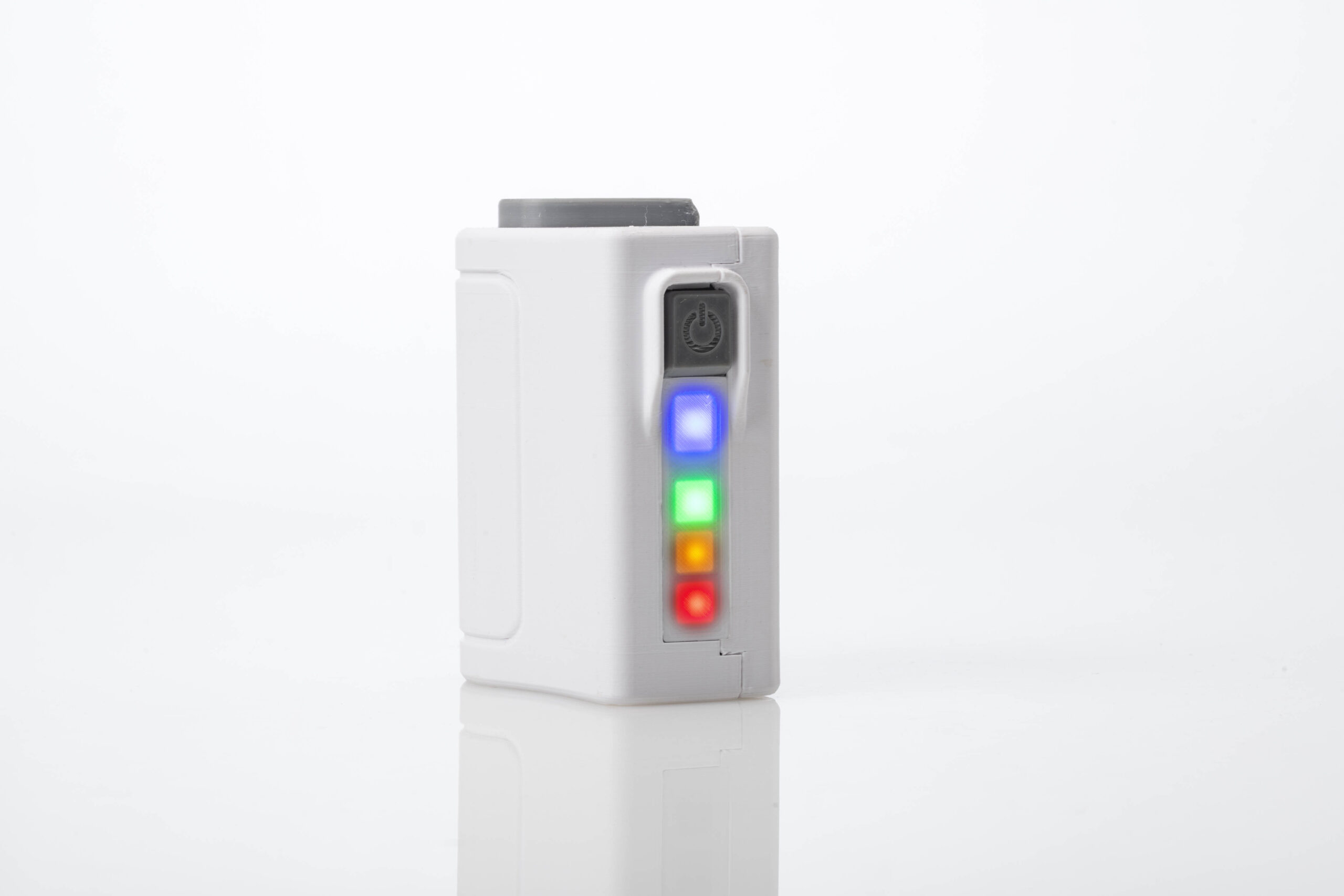
Green — ≤25 ERU
NZ E. coli reference: ≤260 CFU/100 mL. Lower Gram-negative bacterial-risk signal.
Amber — 26–49 ERU
NZ E. coli reference: 261–540 CFU/100 mL. Elevated signal requiring investigation.
Red — ≥50 ERU
NZ E. coli reference: >540 CFU/100 mL. High Gram-negative bacterial-risk signal requiring action and investigation.
Our NZ working criteria
Evidence supporting the proposed NZ screening thresholds.
The proposed NZ recreational-water screening thresholds use Molendotech’s ROC analysis against New Zealand E. coli reference levels, alongside the biological rationale and supporting research below.
Why these reference values?
The Ministry for the Environment identifies 260 E. coli/100 mL for investigation and 540 E. coli/100 mL for notification in its national swimming-water policy explanation. These are the NZ reference points used in our working interpretation.
Why an endotoxin signal?
Evans et al. (1978) showed that stream-water endotoxin measurements reflected bacterial water quality. Sattar et al. (2019) connected contaminated bathing-water lipopolysaccharide with inflammatory responses in laboratory cell models. Later freshwater and coastal studies extend the association evidence.
These studies support the biological rationale; the proposed numerical thresholds come from Molendotech’s supplied ROC analysis.
Molendotech’s 607-sample ROC analysis
In Determining New Zealand thresholds for inland bathing water, Molendotech analysed an existing dataset of 607 inland-water samples from southwest England against NZ E. coli reference levels. This analysis was supplied by Molendotech; it is not presented here as a peer-reviewed or published study. It supports the following proposed NZ recreational-water screening thresholds.
| Screening classification | ERU | NZ E. coli reference (CFU/100 mL) |
|---|---|---|
| Green | ≤25 | ≤260 |
| Amber | 26–49 | 261–540 |
| Red | ≥50 | >540 |
These are screening classifications, not direct ERU-to-E. coli conversions or definitive safe-to-swim results. The analysis reports sensitivity of 87.7% and specificity of 67.8% at 25 ERU, and sensitivity of 82.5% and specificity of 73.3% at 50 ERU. Local comparative testing is needed to confirm or refine performance in New Zealand; required regulatory laboratory testing remains necessary.
Research and supporting bodies
Developed through university research and supported by independent technical work.




Approved university and supporting-body acknowledgements are shown directly. Customer and user organisations are presented separately as testimonials, not as partnership claims.
Selected publications and evidence
Read the underlying material.
Inland waters · 2025
Water Quality Assessment: Endotoxin Brings Real-Time Measurements and Non-Faecally Transmitted Bacteria to the Table
Good et al. · Water, 17, 1674
Setting: Inland waters in southwest England, comparing BacterisK endotoxin results with conventional bacterial culture.
Key finding: Endotoxin results were associated with E. coli levels. Separate molecular analyses also identified potentially pathogenic bacteria beyond faecal indicators, supporting the value of a broader bacterial-risk signal.
The study reported 92.96% sensitivity and 46.3% specificity for its E. coli comparison.
Coastal & transitional waters · 2024
Endotoxin, a novel biomarker for the rapid risk assessment of faecal contamination of coastal and transitional waters
Good et al. · Journal of Water and Health, 22, 1044–1052
Setting: 159 coastal and transitional water samples from southwest England, tested using the earlier BacterisK assay alongside conventional faecal-indicator culture methods.
Key finding: Endotoxin readings were associated with conventional faecal indicators, including enterococci, supporting the relevance of endotoxin screening to coastal investigations.
The study used the earlier ER measurement scale. Performance and interpretation for the current Bactiquick device remain subject to further device-specific evidence.
Freshwater association · 2022
Endotoxin as a Marker for Water Quality
Sattar et al. · International Journal of Environmental Research and Public Health, 19, 16528
Setting: 69 environmental freshwater and tap-water samples from southwest England.
Key finding: Mean endotoxin-risk readings increased across higher E. coli concentration groups, with statistically significant differences between groups. This supports the association between endotoxin measurements and bacterial water quality.
The paper uses the earlier ER measurement scale; its numerical cutoffs differ from the current ERU scale.
Michigan recreational-water field study (2025)
Our clean summary of the Great Lakes Beach Association conference abstract: 39 samples, a 44 ERU / 300 MPN comparison, results and researcher credits. Preliminary conference evidence.
Biological relevance — Sattar et al. (2019)
Evaluation of the proinflammatory effects of contaminated bathing water. Laboratory cell-model evidence connecting bathing-water lipopolysaccharide with inflammatory responses.
Endotoxin and bacterial water quality — Evans et al. (1978)
Rapid Determination of Bacteriological Water Quality by Using Limulus Lysate. Foundational stream-water research supporting the association between endotoxin measurements and bacterial water quality.
Publications overview
A concise index of the research and technical publications associated with Bactiquick.
Put the evidence into context
Tell us what problem you need Bactiquick to resolve.
Our New Zealand team can discuss your application, the correct role for operational screening and whether a demonstration or structured trial is the right next step. Explore Bactiquick applications for water operators and environmental teams.